First Chakra Course: 6 Key Themes for Working with Fears
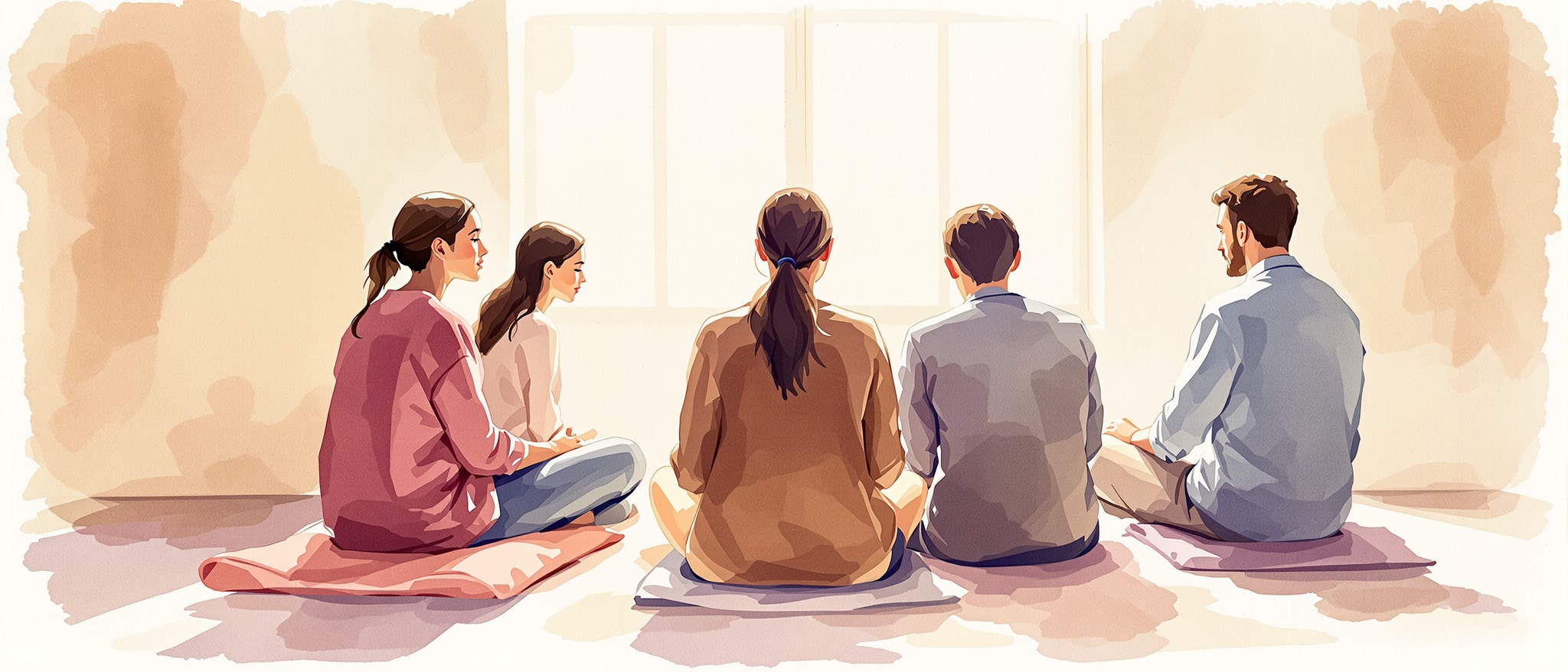
First Chakra Course: 6 Key Themes for Working with Fears
TL;DR: The first chakra (Muladhara) is associated with basic fears — madness, sexuality, and death. Working through these fears opens access to creativity, the ability to say 'yes' to life, and to embrace change. Working with the root chakra is a path from survival to a conscious, fulfilling life.
What is Working with the First Chakra
Working with the first chakra is a process of releasing basic fears that block our life energy and ability to live fully. Muladhara, the root chakra, is located at the base of the spine and is responsible for our sense of security, survival, and connection to the physical world.
When the first chakra is awakened and free from blocks, a person says 'yes' to life. They perceive life as a grand adventure and respond to every challenge with readiness. However, when the chakra is blocked by fears, we essentially say 'no' to what life offers us.
Over more than twenty years of working with the energy of the first chakra, it has become clear: maintaining life force is not enough just by working with energy. It is necessary to remove the blocks that prevent us from being truly alive. These blocks are our fears.
The Connection Between Fears and Desires
Every fear is connected to something that is truly important to us. Behind fear, there is always a desire. If a person fears rejection, it means relationships and intimacy are important to them. If they fear failure at work, it means they value professional fulfillment.
To work with fear, it is necessary to understand what desire lies behind it. This is a key principle of working with the first chakra. We do not simply 'remove' fear — we explore what it protects and find a healthier way to move towards what we desire.
Why It Matters: Living in a Box of Fears
Fears create an invisible box in which we live. This box seems safe, but in reality, it stifles our life force, creativity, and ability to grow.
How Fears Limit Life
A person who fears rejection may live alone for years, even though they dream of a partner. Someone who fears change remains in a marriage that has long become confining, doing nothing to change it — out of fear of causing pain to themselves or another.
If a person has a desire — for example, to skydive, start their own business, move to another country — but they are afraid, they do not do it. Fear becomes a jailer that keeps us in a cage of 'safety.'
"When we feel fear, we are essentially saying 'no' to what life offers us." — Samudro Prem
The Mire of Dissatisfaction
The most destructive consequence of unprocessed fears is when a person begins to sink into a mire of dissatisfaction. They see many interesting things around them, but for some reason, it does not happen to them. They begin to demand from others to make them happy, but others cannot do this.
This leads to anger and negative emotions that consume from within. Dissatisfaction can manifest as anger at the government, laws, employers — at everyone except oneself. But the problem is not in others, but in our attitude towards life.
Who Needs to Work with the First Chakra
This work is especially important for those who:
- Feel they are not living to their full potential
- Notice that fears control their decisions
- Want more creativity and spontaneity
- Are preparing for significant life changes
- Seek a deeper connection with themselves and others
- Are interested in meditation but fear 'losing control'
Theme 1: From Fear to Conscious Living
The first theme of the course lays the foundation — understanding how fears affect our ability to live fully.
Spectrum of Fears
Fears are varied. There are everyday, natural fears — for example, the fear of crossing the road when a truck is speeding by. This is a healthy instinct for self-preservation.
But there are also deeper fears that do not protect but limit:
- Work-related fears: fear of failure, fear of success, fear of not meeting expectations
- Relationship fears: fear of rejection, betrayal, intimacy
- Survival fears: will there be enough money, will there be a roof over the head
- Existential fears: fear of death, meaninglessness, loneliness
Three Basic Fears
When we descend to the root chakra, we find the fundamental fears that underlie all others. Osho identified three fears that constantly arise in therapeutic work:
- Fear of going insane — losing control, becoming 'abnormal'
- Fear of letting go during sexual orgasm — fear of total surrender
- Fear of death — a basic fear that colors everything else
These three fears are the foundation of working with the first chakra. Each of them is dedicated to a separate deep exploration.
Social Conditioning and Fear
Our social conditioning holds us back, forcing us to behave 'well.' We fear that stepping beyond familiar boundaries, we will become 'bad' or 'abnormal.' Society rewards conformity and punishes those who step outside the lines.
But it is precisely beyond these lines that our true life force lies. An awakened first chakra is the ability to go beyond social limitations while remaining conscious and responsible.
Theme 2: Fear of Madness and Creativity
The second theme reveals the unexpected connection between the fear of 'going insane' and our creative potential.
Why We Fear Madness
The fear of madness is the fear of losing control over ourselves, our thoughts, and actions. We fear that if we let go of control, we will do something terrible, become dangerous to ourselves and others.
This fear is deeply rooted in our culture. A 'madman' is an outcast, rejected and isolated by society. From childhood, we learn to control ourselves to avoid rejection.
Connection with Creativity
"When we work through the fear of madness, one of the bonuses gained is increased creativity." — Samudro Prem
Think of great artists and scientists. The peculiarity of such people is that they are a bit 'crazy' from the perspective of an ordinary person. Those who are pioneers of new ways of self-expression are often perceived by society as mad.
Van Gogh, Nikola Tesla, Salvador Dali, Einstein — all of them went beyond 'normal' thinking. This allowed them to see what others do not see and create what no one had created before them.
Creative Resource Within
We hold within us a creative resource that could bring us self-realization if we boldly approached our fear. The fear of madness is a guardian that guards the entrance to our creative laboratory.
When we work through this fear, we gain access to:
- Non-standard thinking
- The ability to see new solutions
- The courage to express ourselves
- The willingness to experiment
- Freedom from others' opinions
Life Beyond the Box
Life in the box and expression beyond it is not only about art. It's about business, relationships, problem-solving. Often we have a problem, and we cannot find a solution in the usual way. We need a perspective from a different angle, a bit rebellious.
One of the practical results of working through the fear of madness is a significant increase in creativity in life and work. A person begins to see opportunities where they previously saw only obstacles.
Theme 3: Unconscious Fears and Their Roots
The third theme delves into the exploration of fears that we carry within, unaware of their influence on our lives.
What Are Unconscious Fears
Unconscious fears are fears that control our behavior but of which we are unaware. We may not understand why we avoid certain situations, why we feel anxiety without an apparent reason, why we sabotage our own success.
These fears often formed in early childhood or were even inherited from previous generations. They live in the body, in the nervous system, in automatic reactions.
How Fears Manifest in Everyday Life
Unconscious fears can manifest as:
- Procrastination and postponing important tasks
- Avoiding conflicts at all costs
- Inability to say 'no'
- Constant anxiety about the future
- Controlling behavior
- Dependence on others' approval
- Physical symptoms: tension in the body, digestive issues, insomnia
The Path to Awareness
The first step in working with unconscious fears is awareness. When fear becomes visible, it loses some of its power over us. We begin to notice how it influences our decisions and gain the choice to follow it or not.
Working with the first chakra creates a safe space for these fears to surface and be seen. This is not an intellectual analysis but a bodily, energetic process.
Theme 4: Fear of Death and Its Impact on Life
The fourth theme explores the deepest of all fears — the fear of death — and how it permeates our entire life.
Fear of Death as a Background
The fear of death is always present as the background of our existence. We may not consciously think about it, but it influences every decision we make. We stop doing things that are cool and fun because they seem risky.
The fear of death manifests in:
- Fear of pain (physical and emotional)
- Fear of change
- Fear of loss
- Fear of the unknown
- Fear of letting go of control
How Fear of Death Hinders Living
"If we fear pain, whether physical or emotional, we are not living." — Samudro Prem
The paradox is that the fear of death prevents us from living. We are so afraid of dying that we stop truly living. We choose safety over adventure, the familiar over the new, comfort over growth.
Changes in life are inevitable. If we indulge the fear of death, we do nothing and change nothing. We sit at home and wait for life to pass us by. It doesn't feel great, and we don't grow or develop.
Fear of Death and Meditation
Interestingly, the fear of death is closely related to the fear of meditation. In meditation, we approach silence, stopping, the disappearance of the familiar 'I.' This resembles death — and frightens.
If we cannot bring silence into our lives, we do not find out who we really are. We fear death, fear life, fear stopping and looking inside.
Transforming the Relationship with Death
Working with the fear of death is not an attempt to stop being afraid. It is a change in the relationship with death. When we accept death as part of life, we become free to live more fully.
Many spiritual traditions speak of 'dying before death' — an experience that frees from fear and opens access to a deeper dimension of life.
Theme 5: Fear of Change and Loss of Identity
The fifth theme explores a fear that is especially relevant for those who have embarked on the path of personal and spiritual development.
The Paradox of Development
When we begin to develop and work on ourselves, we encounter the desire to change, to become better. But when changes really start to happen, we get scared: "I am no longer me, I am someone else."
This is the paradox of development. We want to change but fear change. We want to become different but cling to familiar identity.
Fear of Losing Oneself
The fear of change is essentially the fear of death in another form. We fear that the old 'I' will die and the new one will be alien and unfamiliar. We fear losing our identity, our habits, our comfort.
This fear can manifest as:
- Sabotaging one's own growth
- Returning to old patterns after breakthroughs
- Resisting therapy or practices
- Criticizing those who change
- Devaluing one's achievements
Social Pressure
Changes are associated with risk. For example, the risk that close people will notice that you have changed. They may not accept the new you. They may feel threatened because your changes call into question their own choice not to change.
A person can be a good mother but feel inside that they want something else. Perhaps they want to develop their career, but society says their role is to be a wife and mother. If we fear change, no growth occurs. We do not reveal our potential and do not find our mission in life.
Embracing Change
Working with this fear includes:
- Acknowledging that change is inevitable
- Mourning the old 'I' (this is normal)
- Curiosity about the new 'I'
- Support from a community of like-minded people
- Practices that help integrate changes
Theme 6: Fear of Meditation and the Path to Responsibility
The sixth theme concludes the course, connecting work with fears to the practice of meditation and accepting responsibility for one's life.
Fear of Stopping
The fear of meditation is the fear of stopping, the fear of disappearing. We are used to living in hustle and bustle and do not have time to stop. When we try to meditate, anxiety arises: "What if I stop and nothing happens? What if I disappear?"
This fear exists within each of us. It is connected to the fear of death and the fear of losing control. In meditation, we approach what Buddhists call 'emptiness' — and this frightens the ego.
Meditation as a Safe Exit Beyond
"When we engage in meditation, we consciously go beyond control." — Samudro Prem
In meditation, we do not lose control — we consciously go beyond it. This is a fundamental difference. Dancing wildly and totally is one way to go beyond. In Dynamic Meditation, for example, the second stage is conscious catharsis.
For a few minutes, we allow ourselves to 'go mad,' but in a safe situation. We learn that it is possible to safely go beyond the control of the mind and return back.
"We let go of control, but in a safe situation, and learn that it is possible." — Samudro Prem
The Value of Stopping
One day a week in complete silence, without talking and phones — this is not a waste of time. On the contrary, this hour or day allows you to reboot, and the remaining six days bring ten times more results.
Deep work on oneself is not just the accumulation of information that you will then forget. It is real transformation. A person comes as one and leaves as another. This new person is capable of living life in a new quality, looking at the world in a new way, solving issues and conflicts.
Responsibility as Creativity
Not everyone wants to be responsible for their life. It requires effort, honesty, and readiness to face the unpleasant. But once you step on this path, it becomes clear how interesting it is to be the creator of your life.
Taking responsibility for everything that happens is a creative process. We can change what we don't like and make our life more pleasant. The main thing is that we owe nothing to anyone, do not draw energy from others, because we know that there is a lot of resource inside us for happiness and fulfillment.
"Change your attitude to life, and happiness will come as a consequence of inner harmony." — Samudro Prem
How Fear Processing Works
Working with fears in the context of the first chakra is not an intellectual analysis or an attempt to 'overcome' fear by willpower. It is a bodily, energetic process that includes several levels.
Body Level
Fears live in the body. They manifest as tension, clamps, breathing patterns. Working with the first chakra includes bodily practices that help release these clamps and allow energy to flow freely.
Emotional Level
When bodily blocks begin to dissolve, emotions that were suppressed rise. This can be fear, anger, sadness, shame. It is important to create a safe space where these emotions can be expressed and integrated.
Awareness Level
As emotions are expressed, understanding comes. We begin to see where the fear came from, what function it served, how it is connected to our desires and values.
Integration Level
The final stage is integration. Fear does not disappear completely, but our attitude towards it changes. We can feel fear and still act. Fear becomes information, not a jailer.
What to Do: Practical Recommendations
Start with Awareness
The first step is to start noticing your fears. Keep a journal, noting moments when you feel fear or avoid something. Ask yourself: "What desire lies behind this fear?"
Explore Bodily Sensations
When you feel fear, pay attention to the body. Where do you feel fear? How does it manifest? Tension in the stomach, tightness in the chest, cold in the hands? Just observe, without trying to change.
Practice Conscious Catharsis
Find safe ways to express suppressed emotions. This can be Dynamic Meditation, dance, screaming into a pillow, intense physical exercise. It is important to do this consciously, not reactively.
Take Small Steps Beyond Comfort
Every day do something that scares you a little. It doesn't have to be something grandiose. Talk to a stranger, express your opinion, try a new dish. Gradually expand your comfort zone.
Find Support
Working with fears is not something to do alone. Find a therapist, support group, or community of like-minded people. The presence of other people creates safety and helps to go deeper.
Practice Meditation
Start with short sessions — 5-10 minutes a day. Just sit and observe your breath. When fear or anxiety arises, just notice it and return to the breath.
When to Seek Help
Working with fears can be intense. It is important to know your boundaries and seek professional help when necessary.
Signs That Professional Support is Needed
- Fears are so strong that they interfere with daily life
- Panic attacks or severe anxiety
- Traumatic memories that surface and overwhelm
- Thoughts of self-harm or suicide
- Inability to cope with ordinary tasks
What Can Help
- Individual psychotherapy
- Group therapy led by a qualified facilitator
- Body-oriented therapy
- Trauma work (EMDR, somatic experiencing)
Method Limitations
Working with chakras and meditative practices can be a powerful addition to therapy, but they do not replace professional psychological help for serious conditions. If you are experiencing an acute crisis, consult a specialist.
Frequently Asked Questions
How do I know what I will gain after working through the first chakra?
Not everyone can understand in advance all the results of working with the first chakra. It requires experience and awareness. However, typical results include: more energy and vitality, increased creativity, the ability to say 'yes' to life, reduced anxiety, and a deeper sense of security in the world.
What if I don't drink, don't hit, and just try to be good — why should I work with fears?
'Being good' often means suppressing your life force to meet expectations. This can lead to chronic dissatisfaction, lack of creativity, and the feeling that life is passing by. Working with fears helps find a balance between social adaptation and authentic self-expression.
Isn't it dangerous to 'go mad' during practices?
In the context of conscious practice, it is safe. We do not lose control — we consciously go beyond it in a safe situation. It's like training: we learn that we can let go of control and come back.
Can fears be worked on independently?
Initial work can be done independently: keeping a journal, practicing meditation, taking small steps beyond comfort. However, for deep processing of basic fears, it is recommended to work with an experienced facilitator or therapist.
How long does it take to process fears?
It is individual. Some insights may come quickly, but deep transformation is a process that takes time. Many people return to work with the first chakra several times at different stages of life.
Related Topics and Materials
Working with the first chakra is part of a broader system of working with energy centers. To deepen understanding, we recommend:
Retreats and Programs:
Educational Paths:
Additional Materials:
- Articles on Dynamic Meditation and other active meditations
- Materials on body and energy work
- Resources on trauma-informed approach
Educational material. Not medical help or psychotherapy in the clinical sense. For mental conditions — consult a specialist.